
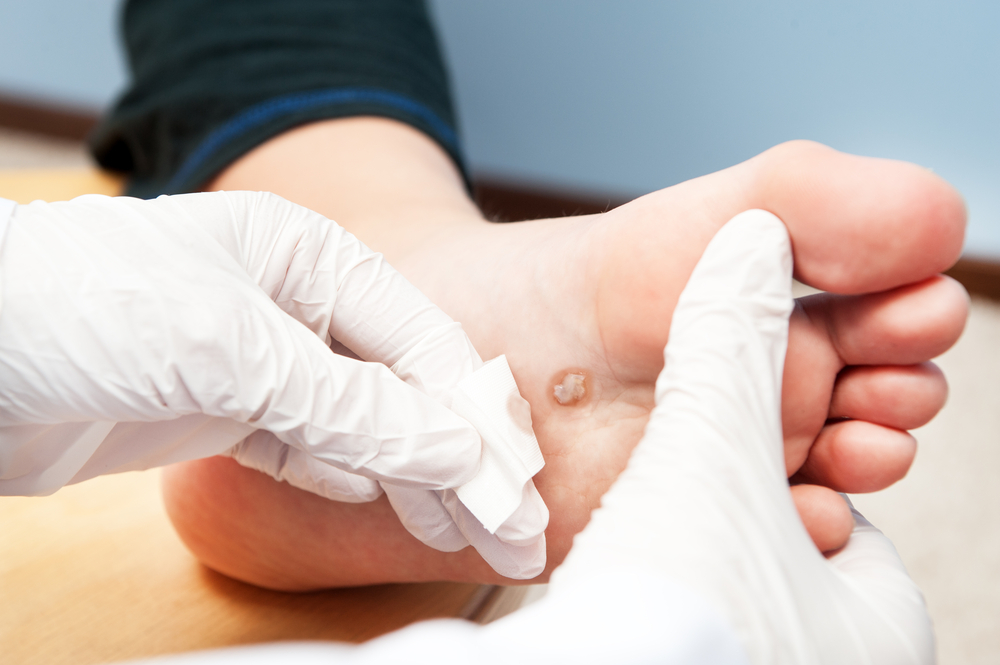
Plantar Wart Treatment in Glendale, AZ
Plantar warts are a common and often stubborn skin condition caused by a viral infection — and they can be far more persistent than most people expect. Over-the-counter treatments frequently fail to eliminate them, leading patients to endure months of discomfort before seeking professional care. At Sole Foot & Ankle Specialists, our board-certified podiatrists provide safe, effective in-office wart treatment options that are significantly more powerful than drugstore remedies, helping patients throughout Glendale, Phoenix, Peoria, and Sun City, AZ get lasting results.
What Are Plantar Warts?
Plantar warts (verruca plantaris) are benign skin growths caused by certain strains of the human papillomavirus (HPV) that infect the outer layer of skin on the soles of the feet. The virus typically enters through small cuts, breaks, or areas of softened, weakened skin and triggers abnormal cell growth, creating the characteristic thick, rough wart tissue. Because the bottom of the foot bears the full weight of the body, plantar warts are often pushed inward — meaning what you see on the surface may be only a small portion of a much larger growth beneath.
Plantar warts can appear as a single wart or in clusters (called mosaic warts), and they vary in size from a small dot to larger patches. While they are not medically dangerous for most people, they can become progressively painful — particularly when located on high-pressure areas like the heel or ball of the foot — and can interfere with normal walking and activity.
How to Identify a Plantar Wart
Plantar warts are sometimes confused with corns or calluses, which can delay appropriate treatment. Key features that distinguish plantar warts include:
- Small, rough, grainy growths on the bottom of the foot — often with a cauliflower-like surface texture
- Tiny black dots visible within the wart (commonly called “wart seeds”) — these are actually clotted blood vessels, not seeds
- Disruption of the normal skin line pattern — the ridges of the skin (like fingerprints) go around a wart but continue normally through calluses
- Pain when pinched from the sides (lateral compression) rather than from direct pressure — the opposite of corns
- Clusters of smaller warts (mosaic warts) that may cover a larger area
When in doubt, our podiatrists can accurately identify the lesion and confirm whether it is a wart, corn, callus, or another skin condition.
What Causes Plantar Warts?
Plantar warts are caused by HPV strains that thrive in warm, moist environments and spread through direct contact with contaminated surfaces or skin. Common risk factors include:
- Walking barefoot in public showers, locker rooms, gym floors, or around swimming pools
- Having cuts, cracks, or abrasions on the soles of the feet that allow viral entry
- Prolonged exposure to wet environments that soften the skin
- Weakened immune function from illness, certain medications, or conditions like diabetes
- Children and young adults are more susceptible due to less developed immunity to HPV
- Contact with an infected person’s wart through shared surfaces or skin-to-skin contact
Professional Plantar Wart Treatment Options in Glendale, AZ
While some warts may resolve spontaneously over time — particularly in children — many persist for months or years without treatment, enlarging and potentially spreading. Our podiatrists at Sole Foot & Ankle Specialists offer in-office treatments that are far more effective than OTC options:
- Prescription-strength topical treatments: High-concentration salicylic acid, trichloroacetic acid (TCA), or other keratolytic agents applied under medical supervision to break down wart tissue progressively
- Cryotherapy: Application of liquid nitrogen to freeze and destroy the wart tissue — one of the most widely used and effective in-office treatments for plantar warts
- Laser therapy: Pulsed-dye laser or CO2 laser treatment precisely destroys the blood vessels feeding the wart, causing the tissue to die and the wart to resolve
- Immunotherapy: Injection of compounds (such as Candida antigen) that stimulate the immune system to recognize and attack the wart — particularly effective for multiple or resistant warts
- Surgical excision or curettage: Direct removal of the wart tissue, typically reserved for large, resistant warts; care is taken to minimize the risk of scarring on the weight-bearing surface
- Bleomycin injections: An antiviral agent injected directly into stubborn warts to disrupt viral replication and stimulate tissue destruction
Multiple treatment sessions may be needed for complete resolution, particularly for large, deep, or mosaic warts. Our team monitors your progress and adjusts the approach as needed for the best outcome.
Frequently Asked Questions About Plantar Warts
How long does it take for a plantar wart to go away with treatment?
Treatment duration depends on the size, depth, and number of warts, as well as the patient’s immune response and the treatment method used. Most warts require 2 to 6 treatment sessions spaced several weeks apart. Some resistant warts may take longer or require a combination of treatment approaches. Our podiatrists set realistic expectations at the start of treatment and keep you updated on progress throughout.
Are plantar warts contagious?
Yes. HPV, the virus that causes plantar warts, spreads through contact with contaminated surfaces or direct skin contact with an infected person’s wart. Family members who share showers, bathroom floors, or pool areas with someone who has a plantar wart are at increased risk. Covering warts with a waterproof bandage in shared spaces and wearing footwear in public wet areas help reduce transmission.
Can I treat a plantar wart at home with duct tape?
Duct tape occlusion therapy has some anecdotal support, but clinical studies show inconsistent results and it is generally less effective than professional treatment. For minor single warts in healthy individuals, it may be worth trying. However, for warts that have persisted for more than 2 to 3 months, are growing, are multiple, or are causing significant pain, professional podiatric treatment is substantially more reliable and efficient.
Do plantar warts always need treatment?
Some plantar warts — particularly in children with healthy immune systems — may resolve on their own over 1 to 2 years. However, waiting risks the wart enlarging, spreading to form mosaic warts, or causing progressive pain. For patients with diabetes, neuropathy, or compromised immunity, untreated warts pose a higher risk of complications and should always be evaluated and treated professionally.
Will a plantar wart come back after treatment?
Warts can recur after treatment if the HPV virus remains present in the skin surrounding the wart, if the patient is re-exposed to the virus, or if underlying immune susceptibility is not addressed. Following all recommended treatment courses completely (rather than stopping when the wart appears gone), maintaining good foot hygiene, and avoiding barefoot exposure in public wet areas all reduce recurrence risk. Some patients may benefit from immune-stimulating treatments to build lasting resistance.
What is the difference between a single wart and mosaic warts?
A single plantar wart is an isolated lesion caused by a localized viral infection. Mosaic warts are clusters of multiple, smaller warts that grow together over a large area — often the entire forefoot or heel. Mosaic warts are typically harder to treat and require more sessions. They develop when a single wart is not treated and the virus spreads along the skin, seeding multiple new growth sites. Early treatment of single warts prevents mosaic progression.
Is it safe for children to be treated for plantar warts?
Yes, and professional treatment is often the kindest option for children who have painful or growing warts. Our podiatrists select age-appropriate, well-tolerated treatment approaches for pediatric patients — typically starting with topical therapies and progressing to other options as needed. We take extra care to minimize discomfort and explain each step to young patients and their parents in a reassuring, child-friendly manner.