
Neuroma Treatment in Glendale, AZ
If you feel as though there’s a pebble in your shoe even when there isn’t, or you experience sharp, burning pain in the ball of your foot, you may be dealing with a Morton’s neuroma. This painful nerve condition is more common than most people realize, and it responds well to professional podiatric care when caught early. At Sole Foot & Ankle Specialists, our board-certified podiatrists provide accurate diagnosis and a full range of treatment options to relieve neuroma pain and restore your quality of life.
What Is a Neuroma?
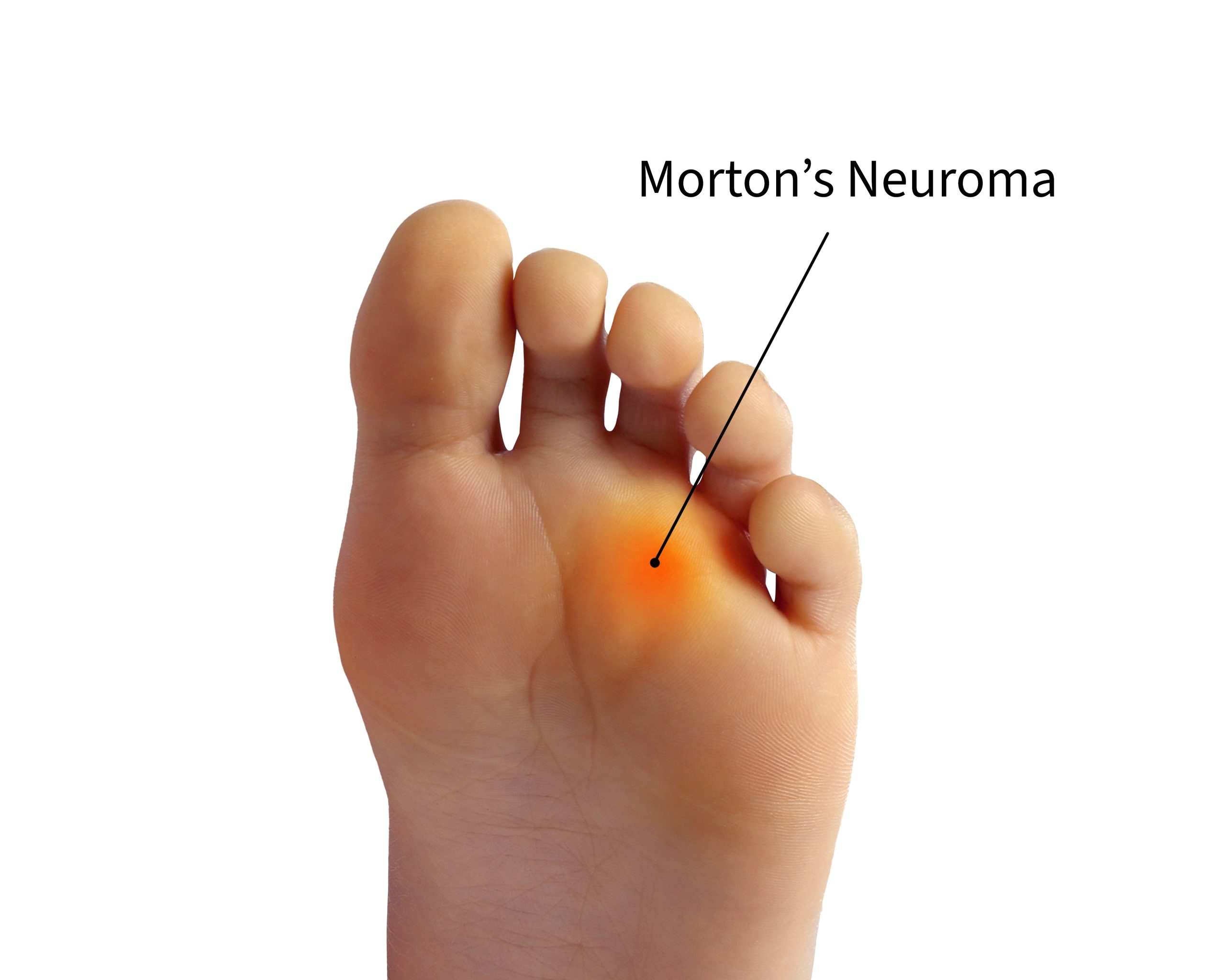
A neuroma — most commonly referred to as a Morton’s neuroma — is a benign thickening of the nerve tissue (perineural fibrosis) that typically develops between the third and fourth toes, in the region known as the third intermetatarsal space. Less commonly, neuromas can develop between the second and third toes. The condition develops when the nerve that passes between the metatarsal bones is subjected to chronic irritation, compression, or injury, causing it to thicken and become inflamed.
Despite its name, a Morton’s neuroma is not a true tumor — it is a reactive enlargement of the nerve’s surrounding tissue. However, it causes real and often significant pain that can make walking, running, and even standing uncomfortable without appropriate treatment.
Symptoms of a Neuroma
Neuroma symptoms typically develop gradually and worsen over time if left untreated. Watch for:
- Sharp, burning, or electric-like pain in the ball of the foot — often described as “walking on a hot rock”
- Numbness or tingling radiating into the third and fourth toes (or second and third toes in second-space neuromas)
- The sensation of something bunched up inside the ball of the foot, like a pebble or a fold in the sock
- Pain that worsens with walking, standing, or wearing tight shoes and improves with rest and removing shoes
- Occasional clicking sensation when squeezing the forefoot (Mulder’s click)
What Causes Neuromas?
Neuromas develop in response to chronic mechanical pressure or irritation of the interdigital nerve. Key contributing factors include:
- Wearing tight, narrow, or high-heeled shoes that compress the forefoot and toes
- Foot deformities such as bunions, hammertoes, or flat feet that alter the mechanics of the forefoot
- Repetitive stress activities — particularly running, racket sports, or activities requiring sustained forefoot pressure
- High arches that increase pressure on the ball of the foot
- Trauma or direct injury to the nerve from a prior foot injury
- Biomechanical abnormalities in gait that cause excessive splaying of the forefoot
How We Diagnose a Neuroma
Neuromas are diagnosed primarily through clinical examination. Our podiatrists perform a thorough physical assessment including palpation of the forefoot, compression testing, and range of motion evaluation. Diagnostic ultrasound is an excellent first-line imaging tool for visualizing the enlarged nerve tissue and confirming the diagnosis. MRI may be used in complex or unclear cases. Accurate diagnosis helps distinguish neuromas from other causes of forefoot pain, including metatarsalgia, stress fractures, and bursitis.
Neuroma Treatment Options in Glendale, AZ
Treatment depends on the severity of the neuroma and how long symptoms have been present. Our approach begins with conservative measures and progresses to more interventional options if needed:
Conservative Treatment
- Footwear modifications: Switching to shoes with wider toe boxes and lower heels immediately reduces compression on the neuroma — often providing significant relief
- Custom orthotics: Prescription orthotics with metatarsal padding separate the affected metatarsal heads, reducing nerve compression and redistributing forefoot pressure
- Corticosteroid injections: Targeted anti-inflammatory injections into the intermetatarsal space to reduce nerve swelling and pain — often highly effective for early-stage neuromas
- Sclerosing alcohol injections: A series of injections using dilute alcohol to gradually dehydrate and shrink the nerve tissue — an effective non-surgical option for moderate neuromas
- Physical therapy: Manual therapy and exercises to reduce forefoot loading and address associated biomechanical contributors
Surgical Treatment
When conservative measures fail to provide adequate relief after an appropriate trial period, surgical excision of the neuroma may be recommended. This is an outpatient procedure performed under local anesthesia with a high success rate for relieving pain. The primary side effect is permanent numbness in the affected toe web space, which most patients tolerate well in exchange for pain relief. Learn more on our Foot Surgery page.
Frequently Asked Questions About Neuromas
Can a neuroma go away on its own?
Early-stage neuromas may improve with footwear changes alone if the underlying mechanical irritation is eliminated quickly. However, once a neuroma has formed and caused structural thickening of the nerve sheath, it will not spontaneously resolve. Without treatment, neuromas typically worsen progressively over time. The sooner treatment is initiated, the wider the range of conservative options available and the better the long-term outcome.
How is a neuroma different from neuropathy?
A neuroma is a localized, mechanical irritation and thickening of a specific nerve between the toes. Peripheral neuropathy is a diffuse condition involving widespread nerve damage throughout the feet and legs, usually from systemic causes like diabetes or vitamin deficiency. Neuropathy typically causes bilateral (both feet) symptoms affecting the entire foot, while neuroma pain is usually confined to one specific forefoot location. Our podiatrists can distinguish between the two with a thorough clinical examination.
Will I have permanent numbness after neuroma surgery?
Yes. Surgical removal of a neuroma involves excising a portion of the affected nerve, which typically results in permanent numbness in the web space between the affected toes. For most patients, this trade-off is well-accepted because it eliminates the chronic pain that was significantly limiting their daily function. Our podiatric surgeons discuss this outcome thoroughly before surgery so that patients can make a fully informed decision.
Do high heels cause neuromas?
High heels are a significant contributing factor to neuroma development and symptom aggravation. They force the foot into a position that compresses the forefoot, increases pressure between the metatarsal heads, and pushes the toes together — all of which irritate the interdigital nerve. Switching to lower-heeled shoes with wider toe boxes is often one of the most impactful steps in neuroma management, and for early-stage cases, this change alone can provide substantial relief.
Can I run with a neuroma?
Running on an active neuroma typically aggravates symptoms. During flare-ups, rest and activity modification are important. Once symptoms are managed with orthotics, appropriate footwear, and other conservative measures, many patients return to running successfully. Custom orthotics with metatarsal padding can significantly reduce the mechanical stress that causes neuroma pain during running. Our podiatrists can help you develop a return-to-activity plan specific to your case.
How many cortisone injections can I have for a neuroma?
Corticosteroid injections are effective for pain relief but are limited in frequency due to potential side effects with repeated use, including fat pad atrophy and nerve tissue damage. Most protocols limit neuroma injections to 2 to 3 courses per year. If cortisone injections provide only temporary relief that becomes progressively shorter, our podiatrists will discuss alternative options such as sclerosing alcohol injections, radiofrequency ablation, or surgical excision.
Are neuromas and Morton’s neuroma the same thing?
Morton’s neuroma is the most common and well-known type of interdigital neuroma in the foot. The terms are often used interchangeably. However, neuromas can technically develop in other nerve locations in the foot. When our podiatrists use the term “neuroma” in the context of forefoot pain between the toes, they are almost always referring to Morton’s neuroma specifically. A clinical evaluation confirms the exact location and nature of the nerve involvement.