
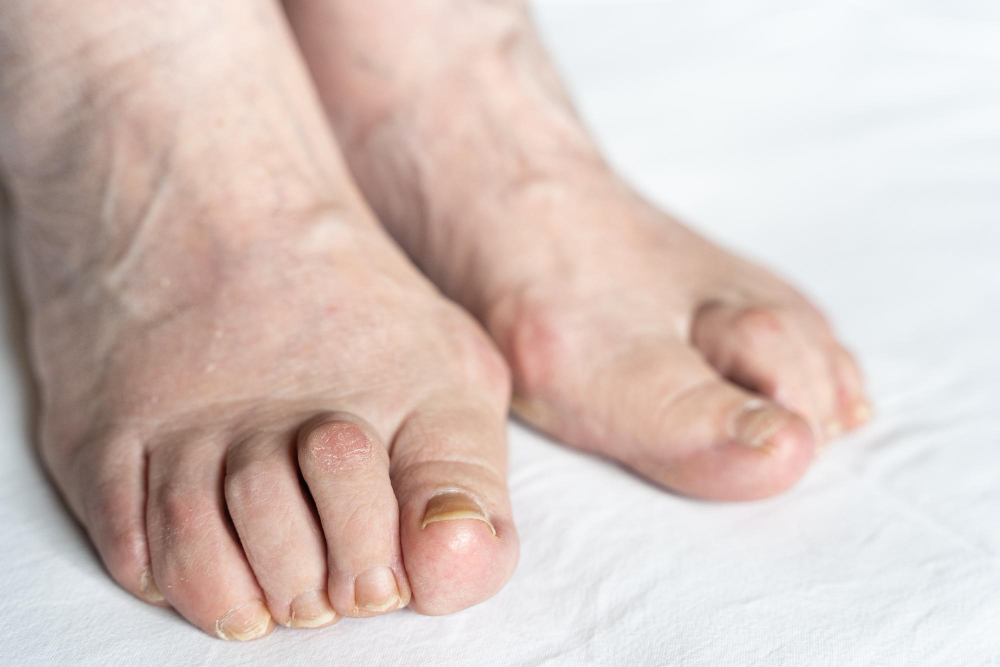
Bunion Treatment in Glendale, AZ
A bunion is more than just a bump on your foot — it’s a progressive structural deformity that, if left untreated, can worsen over time and significantly interfere with your daily activities. At Sole Foot & Ankle Specialists, our board-certified podiatrists offer comprehensive bunion evaluation and treatment for patients throughout Glendale, Phoenix, Peoria, and Sun City, AZ. Whether your bunion is mild and manageable or advanced and painful, we have the expertise to help you find lasting relief.
What Is a Bunion?
A bunion (hallux valgus) is a bony prominence that forms at the base of the big toe joint, caused by a misalignment of the metatarsophalangeal (MTP) joint. As the big toe gradually drifts toward the second toe, the first metatarsal bone shifts outward, creating the characteristic visible bump on the side of the foot. This misalignment changes the mechanics of the entire forefoot, placing abnormal pressure on surrounding structures and often leading to pain, inflammation, and difficulty with footwear.
Bunions are progressive — meaning they do not improve on their own and typically worsen over time without intervention. They can also contribute to secondary conditions such as hammertoes, neuromas, and arthritic changes in the big toe joint.
Signs and Symptoms of Bunions
Bunions can range from asymptomatic (no pain) to severely disabling. Common symptoms include:
- A visible bony bump on the side of the foot at the base of the big toe
- Pain, soreness, or tenderness at the bunion site — especially when wearing shoes
- Swelling, redness, or inflammation around the big toe joint
- Skin thickening (callus formation) over the bunion due to friction
- Restricted movement or stiffness in the big toe
- Difficulty finding shoes that fit comfortably
- The big toe pressing against or overlapping the second toe
What Causes Bunions?
Bunions develop from a combination of genetic predisposition and mechanical stress. Key contributing factors include:
- Genetics: Inherited foot structure is the most significant risk factor — you may inherit the type of foot mechanics that make you prone to bunion development
- Footwear: Narrow toe boxes, high heels, and ill-fitting shoes do not cause bunions but can accelerate their progression and worsen symptoms
- Flat feet and overpronation: Flat feet place excess pressure on the big toe joint, contributing to joint misalignment
- Arthritis: Inflammatory joint conditions like rheumatoid arthritis can accelerate bunion formation
- Foot injuries: Trauma to the foot can damage the joint and contribute to misalignment over time
Bunion Treatment Options in Glendale, AZ
Treatment is individualized based on the severity of the deformity, the level of pain, and your lifestyle needs. Our podiatrists at Sole Foot & Ankle Specialists offer a full spectrum of conservative and surgical options:
Conservative (Non-Surgical) Bunion Care
- Custom orthotics: Custom-fitted orthotic devices correct abnormal foot mechanics, redistribute pressure, and slow bunion progression
- Footwear modifications: Guidance on selecting wider-toed, lower-heeled shoes that accommodate the bunion and reduce friction
- Padding and splinting: Protective cushioning to reduce friction and nighttime splints to help maintain joint alignment
- Anti-inflammatory medications: NSAIDs to manage acute pain and inflammation during flare-ups
- Corticosteroid injections: Targeted injections for significant joint pain and bursitis associated with bunions
- Physical therapy: Exercises to strengthen foot muscles and maintain toe flexibility
Surgical Bunion Correction
When conservative measures fail to provide adequate relief or the deformity becomes severe, bunion surgery (bunionectomy) may be recommended. Our board-certified podiatric surgeons perform modern bunion correction techniques including minimally invasive procedures that realign the bone, restore normal joint function, and relieve pain with a shorter recovery time. Learn more about our surgical approach on our Foot Surgery page.
Frequently Asked Questions About Bunions
Will my bunion go away on its own?
No. Bunions are a structural deformity caused by joint misalignment and do not resolve without treatment. Without intervention, most bunions gradually worsen over time. However, with proper conservative management — including custom orthotics, appropriate footwear, and activity modifications — you can significantly slow the progression and manage symptoms effectively for many years before surgery becomes necessary.
Is bunion surgery painful, and what is the recovery time?
Modern bunion surgery is performed under local or regional anesthesia and is generally well-tolerated. Post-operative discomfort is manageable with medication. Recovery depends on the procedure performed: most patients can bear weight in a surgical shoe within days, return to regular footwear within 6 to 8 weeks, and resume full activity within 3 to 6 months. Minimally invasive techniques can shorten recovery time significantly.
Can I prevent a bunion from getting worse?
While you cannot reverse a bunion without surgery, you can slow its progression. Wearing properly fitted, wide-toed shoes, avoiding high heels, using custom orthotics to correct foot mechanics, and maintaining a healthy weight all help minimize the stress placed on the big toe joint. Regular monitoring by a podiatrist is important to track changes and adjust your treatment plan as needed.
Are bunions hereditary?
Yes — the foot structure that predisposes someone to bunion formation is often inherited. If one or both of your parents have bunions, your risk is elevated. However, heredity alone doesn’t guarantee bunion development; footwear, activity level, and foot mechanics all play significant roles. Early evaluation by a podiatrist can help identify and address risk factors before a bunion becomes painful.
Can wearing the wrong shoes cause a bunion?
Shoes alone do not cause bunions — the underlying foot structure is the primary driver. However, narrow, pointed-toe shoes and high heels accelerate the progression of an existing bunion and can trigger symptoms much sooner. Choosing appropriate footwear is an important part of bunion management and prevention of worsening.
Do I need surgery if my bunion doesn’t hurt?
Surgery is generally not recommended for bunions that are not causing significant pain or functional limitations. Many patients with painless bunions are monitored and managed conservatively with orthotics and footwear advice. Surgery is considered when the deformity becomes painful, interferes with walking or daily activities, or causes secondary problems like hammertoes or joint damage.
What is the difference between a bunion and a bunionette?
A bunion forms at the base of the big toe, while a bunionette (tailor’s bunion) forms at the base of the fifth (little) toe. Both involve bony prominence and joint misalignment, and both can cause pain and difficulty with footwear. The causes and treatment approaches are similar, and our podiatrists treat both conditions with the same comprehensive care.